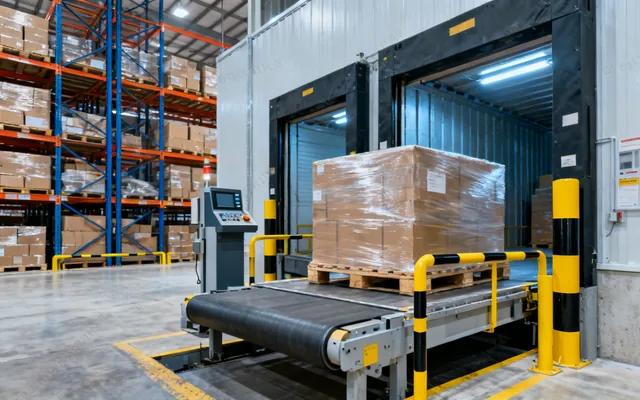
Inbound staging & inspection
Staging positions sized for pallet quality checks so damaged loads never enter a rack load rating envelope without a quarantine path.
Warehouse storage decisions grounded in operating evidence: pallet dimensions, SKU velocity, selectivity versus inventory cube utilization, fire and maintenance aisles, peak window buffer occupancy and acceptance gates translated into reviewable engineering requirements for dependable handover.
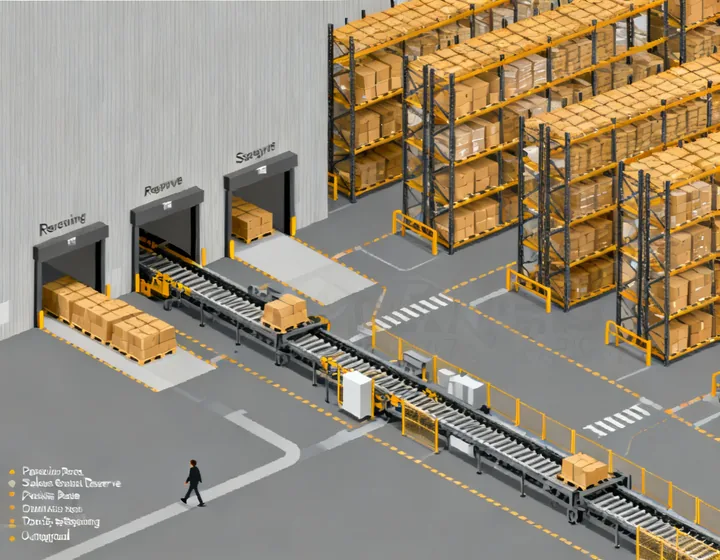
Generated-range planning values for website context—not independently verified public claims.
Cards follow Receive, Store, Move, Pick, Sort and Ship—so operations and capital teams argue from the same material-flow map rather than abstract technology labels.
Staging positions sized for pallet quality checks so damaged loads never enter a rack load rating envelope without a quarantine path.
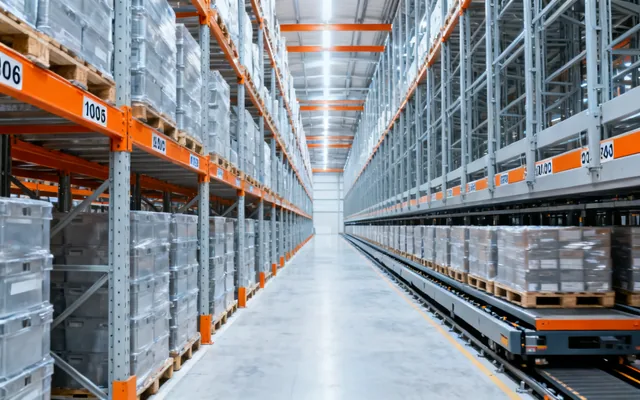
Teardrop pallet rack and shuttle lanes balanced for selectivity, fire aisles and residual capacity—not density slogans alone.
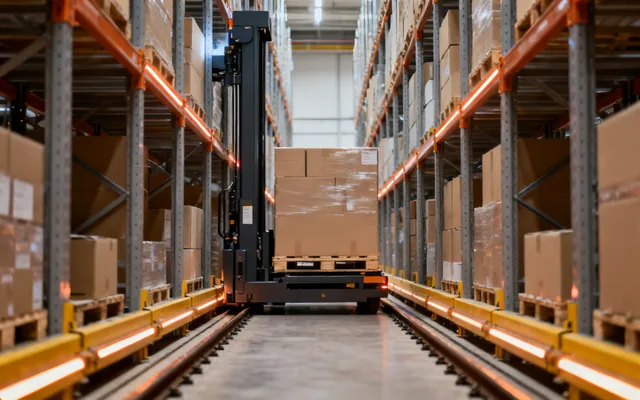
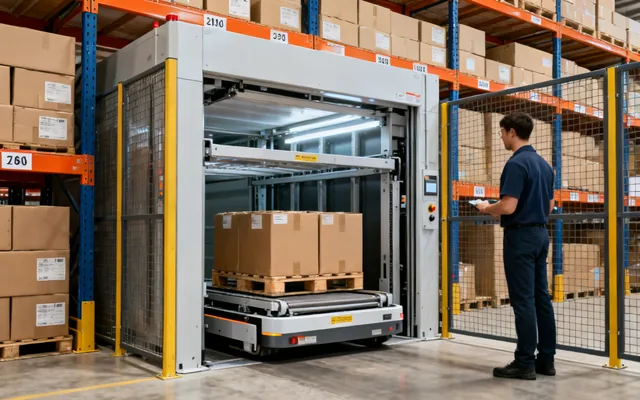
Stacker crane and transfer cars sized to aisle width, load center and duty cycle so move claims stay tied to measured cycles.
Pick faces engineered so order lines per hour stay linked to SKU velocity bands and replenishment timing, not empty presentation slots.
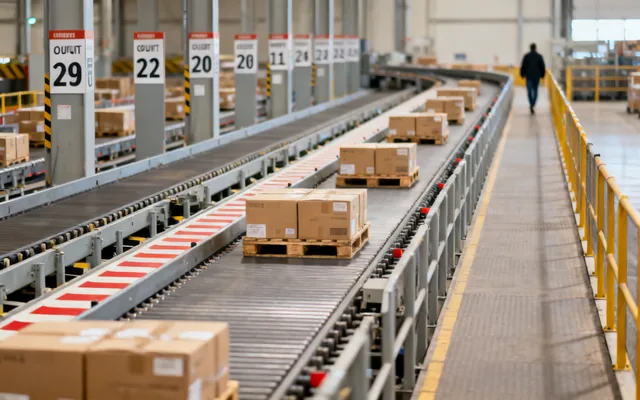
Buffer occupancy made visible so peak windows do not silently steal aisle clearance or fire access paths.
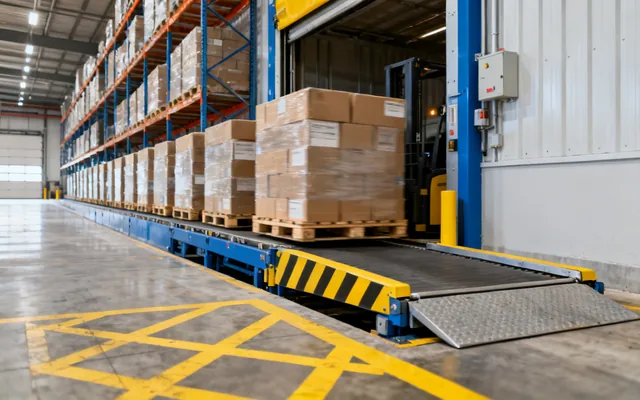
Outbound sequences matched to residual capacity so trailer cutoffs remain predictable when a lane is isolated for recovery.
Inbound staging with pallet inspection before rack entry.
Selective rack and dense storage balanced for access and fire aisles.
AS/RS and aisle transfer sized to load center and duty cycle.
Pick faces tied to SKU velocity and replenishment timing.
Buffer lanes that keep occupancy and fire access diagnosable.
Dispatch sequencing under residual capacity constraints.
Compare SKU depth, peak factor, temperature band and pallet/tote mix before locking density, aisle width or automation boundaries.
| Vertical | SKU depth | Peak factor | Temperature | Pallet / tote mix |
|---|---|---|---|---|
| E-commerce fulfillment | Very deep assortment | High short-cutoff waves | Ambient / conditioned | Mixed cartons & totes |
| Grocery distribution | Moderate, store-aligned | Daily replenishment peaks | Multi-temp staging | Pallets + roll cages |
| Cold chain storage | Focused SKU set | Batch release peaks | Chilled / frozen | Pallet-dominant |
| Manufacturing logistics | Kit and component focused | Line-sequence pulses | Ambient / dry | Pallets & sequenced totes |
| 3PL multi-client | Client-segmented depth | Contract-driven spikes | Client-specific zones | Highly mixed |
Deep assortment and short cutoff waves stress selectivity, replenishment and exception recovery at the pick face.
Store-sequenced replenishment and multi-temp staging make aisle and buffer planning part of density trade-offs.
Temperature zones shrink intervention windows; recovery paths must stay accessible without breaking the cold envelope.
Sequence integrity and residual capacity matter more than raw pallet positions when kits feed the line.
Client-segmented SKU depth requires clear ownership of slots, fire aisles and cutover windows across contracts.
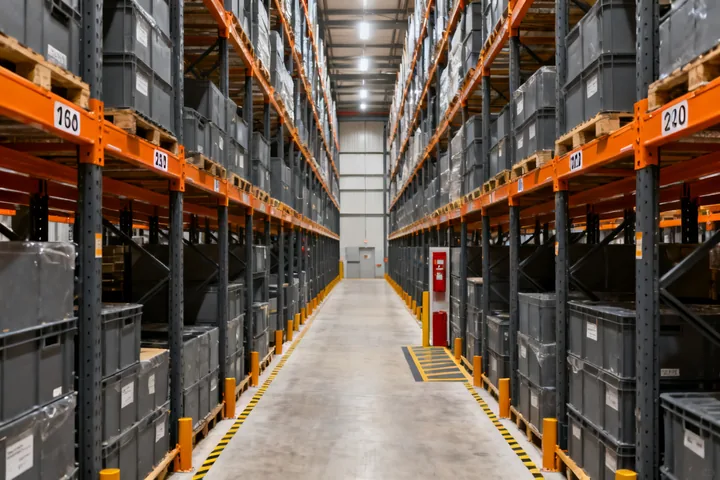
Balance storage density with selectivity, fire and maintenance aisles, recovery access and future expansion. Inventory cube utilization is never quoted without stating the access model that makes the figure operable.
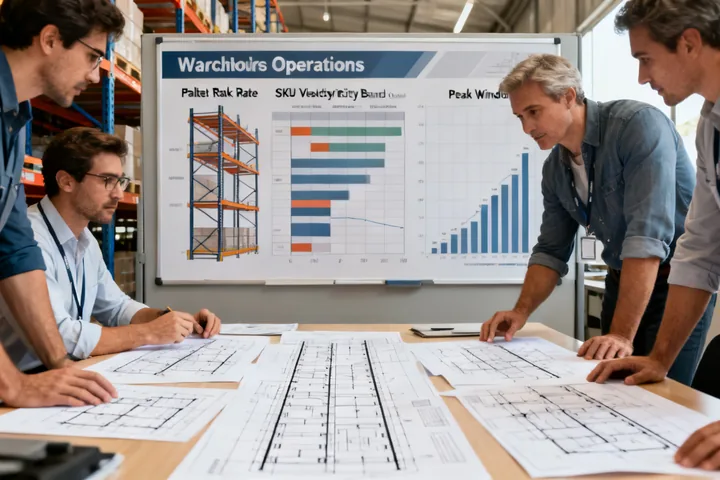
Validate pick rate and order lines per hour against SKU mix, order profile, peak window, accumulation, replenishment and exception recovery—not brochure cycles under empty aisles.
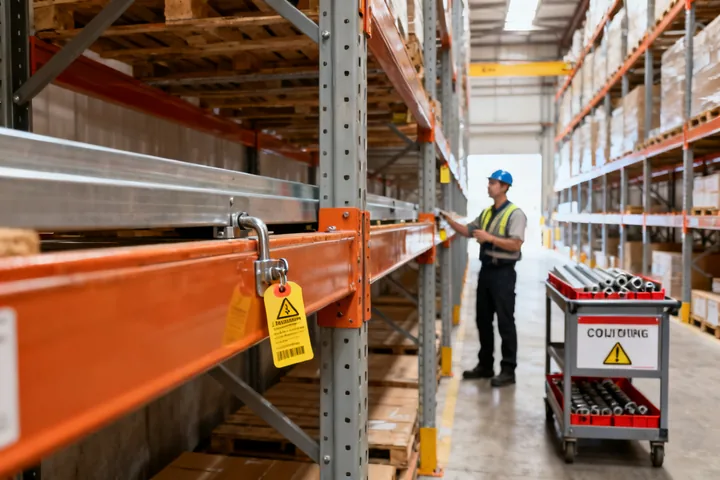
Keep maintenance access, diagnostics, critical spares and recovery procedures visible before operational handover so mean time to repair has a documented path.
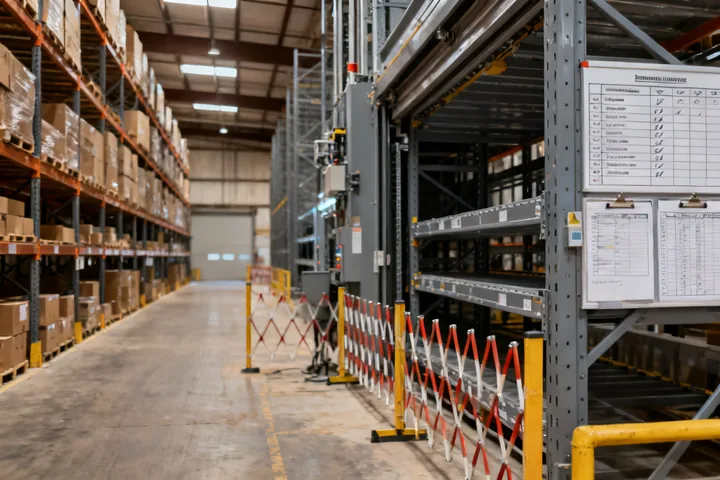
Protect live operations with controlled cutover, fallback states, commissioning windows and measurable acceptance gates—especially when greenfield freedom is not available.
Bring pallet dimensions, SKU/order profile, peak rate, interfaces and site constraints. We respond with a structured evaluation path—not a density promise without assumptions.